Friday, 5 June 2015

ANIMAL AND PLANT CELL MODELS

GREAT WORK! THIS YEAR ESO 2 STUDENTS HAVE MADE SOME FANTASTIC MODELS OF ANIMAL AND PLANT CELLS. 

These models have been a fun way to learn the different  organelles that make up cells and the main differences between animal and plant cells.

CHECK THEM OUT HERE!  


SCIENCE FAIR PROJECT - TURNING MILK INTO PLASTIC! By Sergio Rodríguez Bastian

BIODEGRADABLE PLASTIC!

 Plastic made from milk was quite common in the early 1900s. In fact, it was used to make ornaments in the early 20th Century. This plastic, known as casein plastic was used to make buttons, decorative buckles, beads and other jewellery. Galalith ( Gala - milk and lith - stone ) was the commercial name of an important manufacturer of casein plastic ornaments.

 It is made by mixing vinegar and milk. The acid in the vinegar makes the casein molecules join together making polymers. Plastic is made up of polymers, in this casecasein polymers.

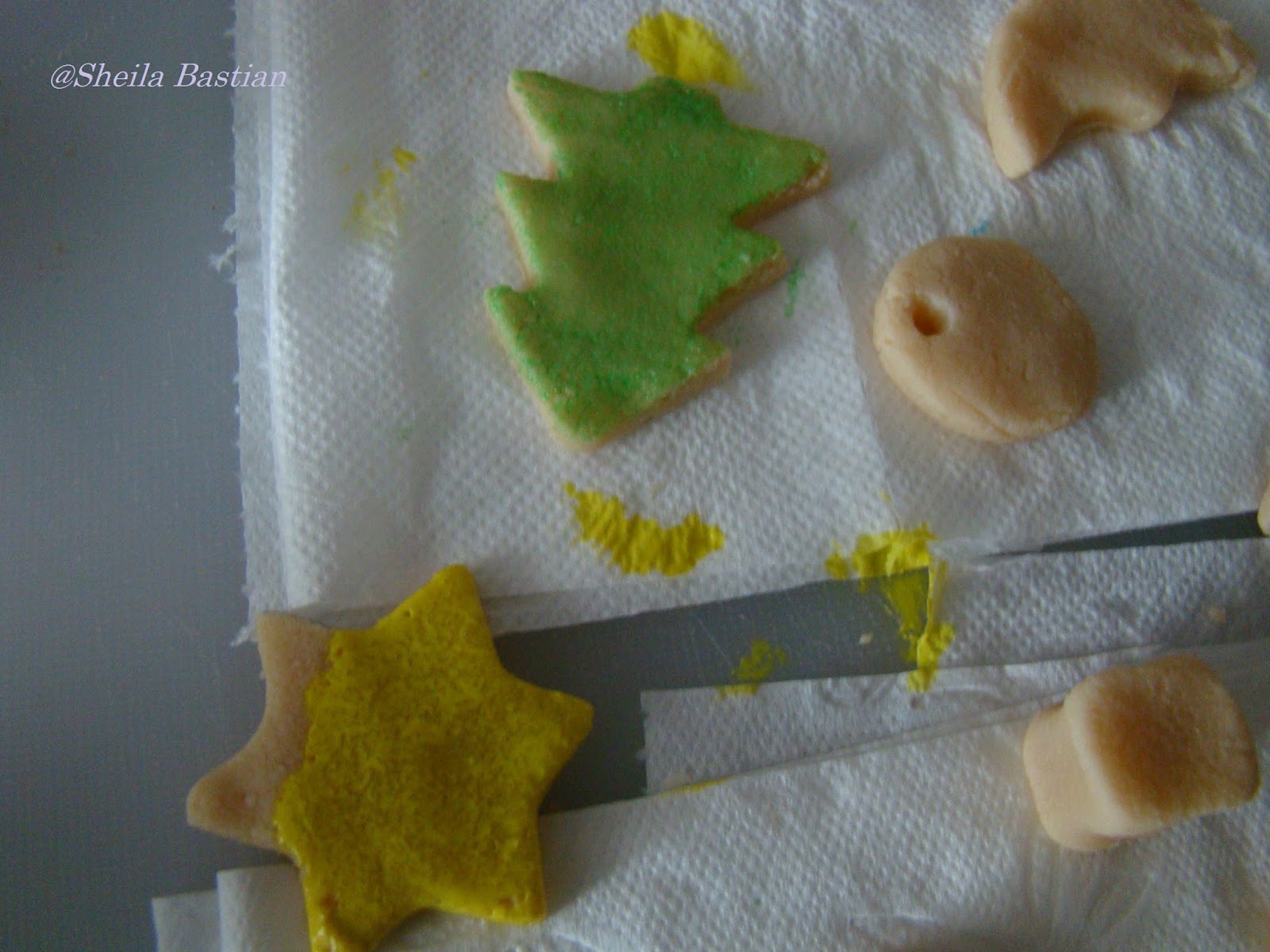
 In this project we used different shaped moulds to make casein plastic figures. We made buttons,
ornaments for necklaces, buttons and dices.

THESE BEAUTIFUL ORNAMENTS ARE MADE OF MILK. YES, MILK!!


HOW TO MAKE CASEIN PLASTIC.

1. Put 250 ml of milk in a beaker or cup.


2. Heat in with a Bunsen burner or microwave oven.

3. Add 4 tablespoons of vinegar and mix it.

4. Pour through the strainer.


5. Scoop the clumps out with a spoon and put them on the paper towels.

6. After about 30 minutes, put the mixture in a bowl and mix until its smooth.

7. Put it in moulds and let it dry for a few days.


8. Once they are completely dry, you can paint the figures.


9. You will be surprised at how hard the plastic becomes when dry.


Wednesday, 29 April 2015

SCIENCE FAIR - Last minute preparations

 Students have been finishing off their experiments this morning and rehearsing their explanations. They are now almost all ready for this afternoon's Science fair, which takes place as part of the school's open doors event.

Monday, 20 April 2015

NEXT GRADE TESTS

ESO 1 - Unit 12 - Matter and it's properties and elements and their symbols.
Groups A,B,C,E - 6th May
Groups D,F - 7th May

ESO 2 - Unit 11 - Heat and temperature 
              Unit 12 - Light and sound
Groups A,C,D - 4th May
Group B - 5th May


Friday, 10 April 2015

MATERIALS FOR EXPERIMENTS - ESO 2

EXPERIMENT - GROWING PLANTS FROM TUBERS

We are going to work in groups of 2,3 or 4.

Each group will need a potato and a medium size plastic plant pot, (between 15 and 20 cm diameter is fine, although bigger will do).


1 Kg - 2.2 Lb Bag of Small Mix River Rocks Stones Vase Filler Decor DecorationEXPERIMENT: MAKING AN ECOSYSTEM

We are going to work in groups of 2, 3 or 4.

Each group will need:
 - 2 x 2litre plastic bottles

 - a small packet of soil (the soil is for both experiments) (5L)
 - a bag of small stones


Wednesday, 25 March 2015

Read, learn and enjoy more!!

For more interesting things related to science, join Science Magazine on twitter:  @sciencebastian

Friday, 13 March 2015

ELECTROMAGNETS - MAGNETS THAT CAN BE TURNED ON OR OFF

WHAT IS AN ELECTROMAGNET?

 An electromagnet is a magnet that is created using an electric current. When an electric current flows in a wire it creates a magnetic field. By winding the wire into a coil we can strengthen the magnetic field. We can make an even stronger electromagnet by winding wire around a metal core, for example, an iron nail.When electricity passes through the wire, a magnetic field is created around the nail. The advantage of electromagnets is that, unlike ordinary magnets,  they can be turned on or off, by connecting or disconnecting the electric source. This makes the applications of electromagnets endless. The magnetic force created by electromagnets can strengthened or weakend by increasing or decreasing the electric current or by adding more turns to the coil.

  Electromagnets are used in many electronic devices including hard disk drives, speakers, motors and generators.


 This experiment was presented two years ago in the school science fair. It is a fun way to explain and understand how electromagnets work. To make this device a shoe box, card, string, a match box were used. For the electromagnet, a nail, wire, and a battery and a piece of card and paper clip to make a switch. How to play? Switch on the electromagnet and stick a small metal to it. Push the match box, until it begins to swing. Now try to make the metal fall in the box by switching the electromagnet off.