 |
| By Cristina Romero and Elena Pérez |
Wednesday, 10 July 2013
NEW NATURE SPOTTING PHOTOS!
Check out the Nature Spotting section for new photos taken at Cañada de los Pájaros, Seville.

Monday, 10 June 2013
PROTOZOA
| CULTIVATING PROTOZOA IN THE CLASS |


Check out these videos! You can see many moving protozoa!! These are two of our samples!!
Sunday, 9 June 2013
SCIENCE FAIR PROJECT - PROTOZOA - By Álvaro Méndez
 |
| Protozoa panel by Álvaro Méndez |

Characteristics
Protozoa commonly range from 10 to 52 micrometers, but can grow as large as 1 mm, and are seen easily by microscope. The largest protozoa known are the deep-sea dwelling xenophyophores, which can grow up to 20 cm in diameter.
 |
| Álvaro making a model of Vorticela |

Motility and digestion
Tulodens are 2 of the slow-moving form of protozoa . They move around with whip-like tails called flagella, hair-like structures called cilia, or foot-like structures called pseudopodia. Others do not move at all. Protozoa may absorb food via their cell membranes, amoebas, surround food and engulf it, and yet others have openings or "mouth pores". All protozoa digest their food in compartments called vacuoles.
Ecological role
Protozoa are an important food source for microinvertebrates. As predators, they prey upon unicellular or filamentous algae, bacteria, and microfungi. Protozoa are consumers, both herbivoresand carnivores. They also control bacteria population.
Reproduction
Protozoa can reproduce by binary fission or multiple fission. Some protozoa reproduce sexually, some asexually. An individual protozoan is hermaphrodite.
Classification
They are classificated into ciliates, mastigophorans, and apicomplexans. Most protozoa can move about on their own.
Human diseases
Some protozoa are human parasites, causing diseases. Examples of human diseases caused by protozoa:
Malaria
Amoebiasis
Information source - Wikipedia
 |
| Add caption |
 |
Alvaro's model of Vorticela. This protozoa "jumps" by curling and stretching its flagellum.
Protozoa stand ready for the Science Fair
|
Sunday, 19 May 2013
SCIENCE FAIR PROJECT - MEDICINAL PLANTS - By José Luis Benavente
 |
| Medicinal plants collected by JoséLuis Benavente |
Rosemary (Rosmarinus officinalis)
Infusions of rosemary are
used for coughs , fever and painful digestions. Filter and drink three cups a
day.
Oleander (Nerium oleander)
This poisonous plant in
the hand of doctors can be converted into an excellent medicine .The
pharmaceutical industry uses it for preparing cardiotonic and diuretic
specialities .The hydroalchoholic extract of oleander acts on the movement of the heart.
Mallow (Malva silvestris)
For swollen gums and
throats . In a cup of boiling water soak a teaspoon of mallow flowers for 10
minutes . Filter the liquid and use as a mouthwash . Repeat several times a day.
Orangetree (Citrus aurantium)
It´s used to prevent
insomnia and nervous excitement . Put a cup of boiling water two grams of
orange leaves , filter and sweeten with honey before drinking.
Nettle (Urtica dioca)
It is a infallible remedy
for bleeding, it´s used as a remedy for sputum, also blood loss caused by
menopausial disorders .The stinging nettle juice stops nosebleeds when
introduced through the nose, it´s also
used as a multivitamin specially to increase milk production in women after child
birth.
Thistle (Sylibum marianum)
Milk thistle is also used
in many products to reduce the effects of a hangovers.
Bibliography - Text translated from "EL MARAVILLOSO MUNDO DE LAS HIERBAS" Editorial SA
Bibliography - Text translated from "EL MARAVILLOSO MUNDO DE LAS HIERBAS" Editorial SA
 |
| Stand ready for the Science Fair |
 |
| José Luis Benavente at the Science Fair 2013 |
 |
| José Luis Benavente explaining his project during the Science Fair |
SCIENCE FAIR PROJECT - TURTLES - By Amaya Valdés

 |
| Male and female turtles |
The most important characteristic of the skeleton of turtles is that a large part of the spinal column is welded to the back side of the shell.

The skeleton makes breathing impossible by movement of the rib cage si it is performed primarily by the contraction of the modified abdominal muscles. The skull has great features of primitivism.
Although lacking teeth, they have a beak covering its mandible, like the beak of the birds.
Like all reptiles, turtles are ectothermic, which means that their metabolic activity depends on the external or temperature of the environment.
Turtles shed their skin, but unlike lizards and snakes, they do it gradually. They also molt the shields of the carapace, individually and apparently in no particular order.


 |
| Amaya Valdés working on her model of a turtle |

 |
| Model of the internal organs of a turtle |
 |
| Model of a turtle with its carapace |


 |
| Preparing the terrarium for the turtles |


 |
| Stand ready for the Science Fair |
 |
| Amaya Valdés at the Science Fair 2013 |
Sunday, 5 May 2013
ORIGIN OF THE ATOM THEORY
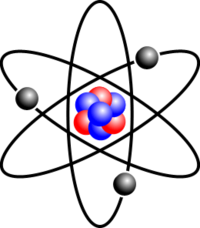
Check out this interesting video about the origin of the atom structure theory. The study of atoms has changed from thinking that atoms are static particles, to then finding that the electrons move around the atoms, now it is known that electrons do not follow the laws of motion and that the movement of electrons is unpredictible.

Click here! http://science.howstuffworks.com/29430-assignment-discovery-origin-of-the-atom-theory-video.htm
Friday, 3 May 2013
ELEMENTS AND THEIR SYMBOLS YOU MUST STUDY
Here is a
list of elements and their symbols that you studied last year. It is convenient
that you revise them again this year. Most elements have very similar names in
spanish and in english but I have written next to the ones that differ a little more, the
name in spanish too. You must study them for the next grade exam.
Go to the articles section to watch a really interesting video about the origin of the atom theory!
Go to the articles section to watch a really interesting video about the origin of the atom theory!
H –
Hydrogen
Na – Sodium
K –
Potassium
Mg –
Magnesium
Ca –
Calcium
Ba – Barium
Ra – Radium
Mn –
Manganese
Fe – Iron –
Hierro
Co – Cobalt
Ni – Nickel
Pt –
Platinum
Cu – Copper
– Cobre
Ag – Silver
Au – Gold
Zn – Zinc
Hg –
Mercury
B – Boron
Al – Aluminium
C - Carbon
Si – Silicon – Silicio
Sn – Tin – Estaño
Pb – Lead –
Plomo
N –
Nitrogen
P –
Phosphorous
As –
Arsenic
O – Oxygen
S – Sulphur
F –
Fluorine
Cl –
Chlorine
Br –
Bromine
I – Iodine
He – Helium
Ne - Neon
Ar – Argon
Xe – Xenon
Rn - Radon
Subscribe to:
Posts (Atom)